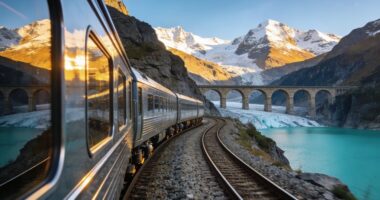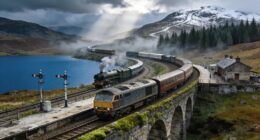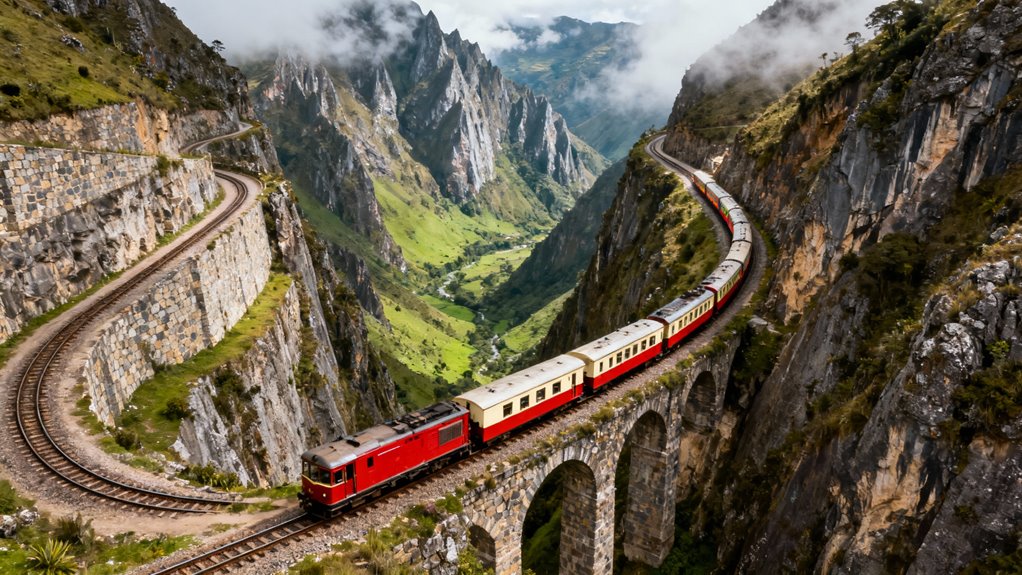

The Devil’s Nose Train conquers impossible terrain through zigzag switchbacks that reverse direction at each station, dropping 500 meters over 12 kilometers of track blasted into sheer cliff faces. Engineers in 1902 used spiral tunnels and 5.5% grades—steeper than standard specs—to navigate Ecuador’s Andes at 3,000 meters altitude. Over 2,000 workers died building it. Modern trains cross 100-meter-high suspension bridges while passengers snap photos from windows, though fog can wreck visibility. The three daily departures showcase century-old engineering that still defies belief.
Experience Scenic Mountain Railway Journeys Through 500-Meter Vertical Andean Drops
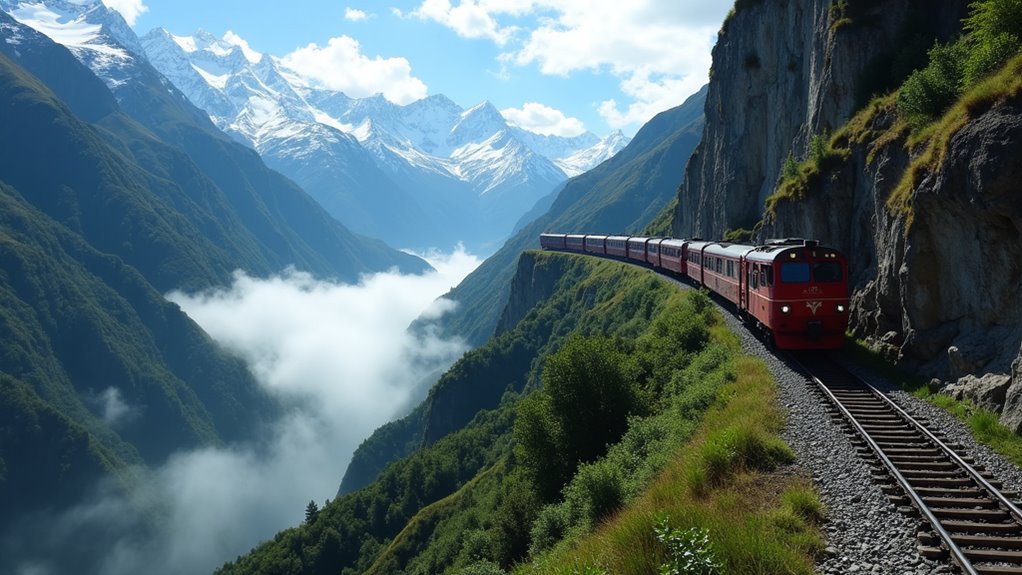
The Devil’s Nose Train doesn’t mess around. This scenic mountain railway journey plunges 500 meters through dramatic elevation changes that’ll likely make your stomach drop.
The heritage railway tours use zigzag switchback designs carved into sheer rock—apparently the only way engineers could tackle these steep gradient routes back in 1902.
Alpine switchback train climbs work in reverse here. Instead of ascending, you’re descending through cloud forests and gorges while passengers snap away at scenic photography opportunities from open windows. Three daily departures keep the trains running at 8:00am, 11:00am, and 3:00pm for tourists.
Modern passenger safety systems keep everyone secure these days. Like other scenic train routes such as the Coast Starlight, this railway offers passengers stunning views throughout the journey.
That said, construction was brutal—2,000 workers died building this impossible route. The workforce included around 3,000 Jamaicans and 1,000 Puerto Ricans who carved this engineering marvel into the mountainside. Even so, calling it breathtaking doesn’t begin to cover it.
Steep Gradients at 3,000 Meters: The High Altitude Challenge Engineers Conquered
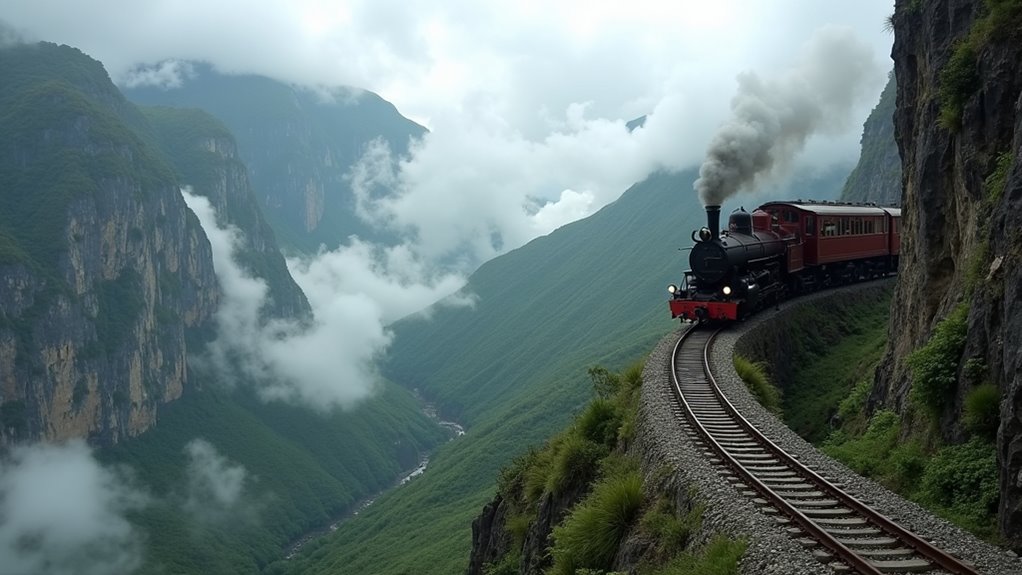
Perched at altitudes where most people struggle to catch their breath, Devil’s Nose engineers somehow convinced locomotives to climb grades that should’ve been physically impossible.
These high altitude railroad expeditions tackled 5.5% gradients—two full percentage points steeper than trains were designed for.
Engineers pushed locomotives up 5.5% grades—impossibly steep terrain that defied every design specification trains were built to handle.
The engineering marvels required zigzag tracks and mechanically adapted locomotives just to function at 3,000 meters, where thin air wreaked havoc on both machinery and human stamina.
Historic locomotives needed special boiler adjustments to avoid overheating in oxygen-starved air—a problem that likely caught early engineers off guard.
On top of that, mountain pass crossings became railway engineering feats through sheer stubbornness.
The altitude-induced technical challenges killed over 2,000 workers. That’s the price of impossible.
Like Switzerland’s Bernina Express with its UNESCO World Heritage status, the Devil’s Nose represents how mountain railways push engineering boundaries to create unforgettable experiences.
The route descends from 2428 meters at Alausí through a 35.1 km stretch that includes the infamous Devil’s Nose segment, where tracks zigzag to gain 150 meters of elevation over just 1.47 kilometers.
President General Eloy Alfaro envisioned this connection between Guayaquil and Quito back in 1895, despite widespread skepticism about traversing the Andes.
How Do Alpine Switchback Climbs Use Engineering Marvels With Zigzag Reversals?
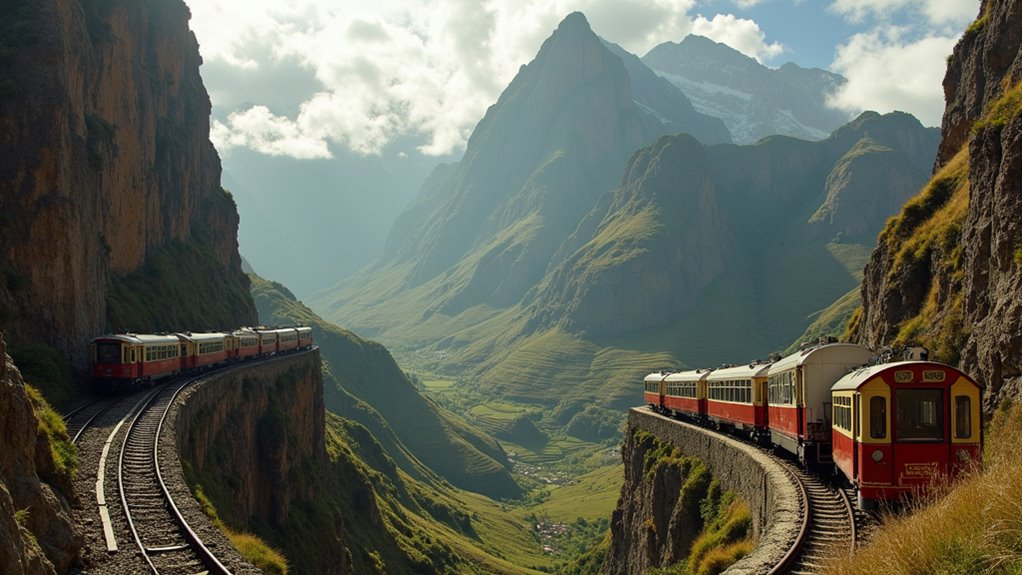
Why bother carving miles of tunnels through solid rock when you can just make the train go backwards? Alpine switchback climbs rely on zigzag reversals—a brutally simple concept where trains stop at designated reversing stations, switch tracks, and proceed in the opposite direction.
It’s a straightforward workaround that dodges expensive tunnel work while conquering gradient limits that would otherwise make standard rails slip and lose traction.
The engineering challenges? You need robust switching mechanisms, sure, but the real focus is on safety systems that prevent heavy equipment from rolling backward down the mountain.
That said, passengers get treated to dramatic scenic routes as trains literally reverse direction multiple times during the climb. The experience can feel disorienting at first, but it’s part of the charm.
On top of that, switchback construction is economical—significantly cheaper than boring through rock. It’s effective on steep grades where alternatives would be cost-prohibitive or physically impractical. The discontinuous grades break steep terrain into shorter segments, making engineering far more manageable than attempting continuous climbs.
Historic switchback systems demonstrated this principle remarkably well, with self-acting switches facilitating zigzag transport automatically without manual intervention at each reversal point.
And on extreme terrain, these zigzag reversals remain what appears to be the smartest solution engineers have come up with. Like Canada’s renowned Rocky Mountaineer routes, switchback systems prove that engineering ingenuity can transform challenging landscapes into unforgettable travel experiences. Not the most elegant, perhaps, but reliably functional where it counts.
Navigate Canyon Edge Rail Passages Along Sheer Cliff-Hanging Routes

When engineers decided to carve a railway along the edge of a near-vertical Andean cliff in the early 1900s, they weren’t aiming for subtlety.
Devil’s Nose train route clings to sheer rock faces for 12 kilometers, descending somewhere between 500 and 1,000 meters through switchbacks that look more like an optical illusion than functional infrastructure. These canyon edge rail passages hug precipices with minimal margin—sometimes just meters from deadly drop-offs.
Extreme terrain navigation meant blasting railbeds directly into basalt cliffs. The result? Sheer cliff-hanging routes that now deliver panoramic views across multiple valleys. The ingenious engineering feat was completed in 1908.
On top of that, the historical impact of this railway construction appears to have transformed regional commerce while establishing one of Ecuador’s most dramatic scenic train routes. It conquered elevation changes once deemed impossible—though at what cost to workers and the landscape is less often discussed. The journey showcases stunning landscapes of the Ecuadorian Highlands and Chan Chan valley throughout the descent.
While Canada’s Rocky Mountaineer offers spectacular mountain vistas through the Rockies, Ecuador’s Devil’s Nose provides an entirely different kind of cliff-edge adventure.
Spiral Tunnel Engineering Marvels Carved Into Vertical Rock Faces
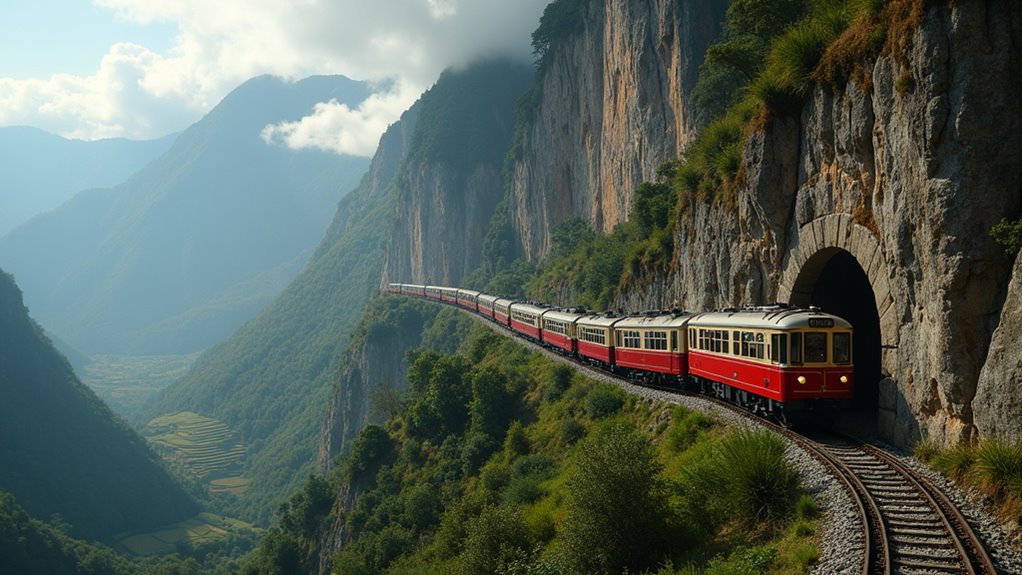
Carving a railway through a near-vertical rock face is absurd enough—doing it with spiral tunnels that loop back on themselves takes audacity to another level.
The Devil’s Nose engineers faced a brutal math problem: drop 500 meters in just 12 kilometers without turning the train into a runaway death trap. Their solution? Track spirals carved directly into steep rock faces, zigzagging back and forth to tame grade percentages below 5%.
Excavation through unpredictable geology meant constant rock stability assessments—one day’s solid granite could give way to crumbling sediment the next.
On top of that, geometric alignment had to be millimeter-perfect. One miscalculation and trains derail, simple as that.
What human switchmen once handled manually—coordinating traffic through these corkscrewing passages—is now managed by modern signaling and traffic controls.
That said, the core engineering remains unchanged. These spiral tunnel marvels are still functional today, which likely speaks more to nineteenth-century precision than to any margin for error built into the original design. The 12-kilometer stretch serves as a vital transportation link connecting Quito to Guayaquil, two of Ecuador’s most important cities. Modern travelers can experience this engineering marvel by purchasing train tickets through various booking platforms, making this historic route accessible to adventurous tourists.
Historic Locomotives Operating Since 1902 Prove Century-Old Conquest Methods
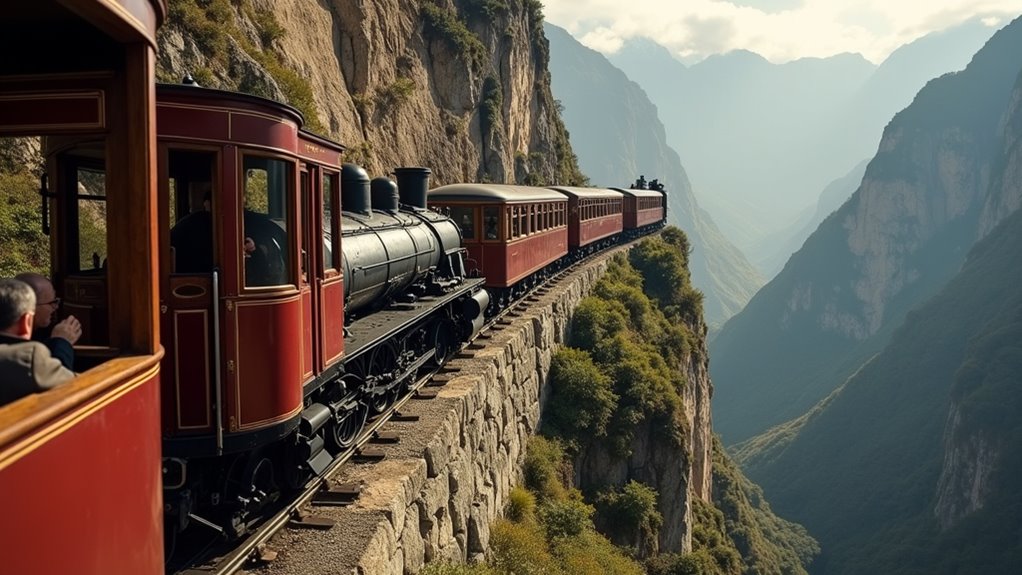
Steam hissing through valves, metal wheels grinding against narrow rails—the locomotives that first conquered Devil’s Nose in 1902 weren’t just machines, they were rolling tributes to sheer engineering stubbornness**. North American contractors designed these heritage steam locomotives specifically for Ecuador’s challenging landscapes**, building vintage rolling stock that could handle 3.5% gradients and endless switchbacks.
Twelve kilometers. Eight hundred meters of climb. The narrow gauge systems hauled both passengers and freight up slopes that would’ve made most engineers reconsider their career choices.
That said, these weren’t your average trains. The historic lines were carved directly into basaltic andesite cliffs—solid volcanic rock that probably felt more permanent than the railway itself.
Mountain railway journeys like these demanded locomotives tough enough to withstand earthquakes, torrential rain, and spectacular viewpoints that, let’s be honest, would’ve terrified any sane engineer. Even so, the railway infrastructure appears to have been built with genuine staying power. A century later, and they’re still running.
The entire engineering feat took 25 years of attempts before the railway finally opened in 1908, connecting Guayaquil to Quito after countless failed efforts. Unlike modern high-frequency routes that offer daily departures every hour, these mountain trains operated on schedules dictated by weather and terrain rather than passenger convenience. Modern carriages feature quaint and comfortable seating arrangements that make the legendary descent far more pleasant than conditions endured by original passengers.
Witness Panoramic Views From 100-Meter High Suspension Bridge Train Crossings

One hundred meters. That’s the distance between passengers and the gorge floor when trains inch across suspension bridges on the Devil’s Nose route.
These luxury panoramic excursions cut through mountain terrain where steel meets sky, turning the carriages themselves into moving observation platforms—and the views probably justify Ecuador’s reputation as a tourist destination, though that depends on how you feel about heights.
Safety standards keep everyone locked inside now. No roof riding anymore. Even so, the cultural and tourist impact remains massive. Visitors still flood scenic points with cameras in hand, desperate to capture that vertigo-inducing moment when the train crawls across viaducts spanning what looks like nothing but air.
Some shots work, most don’t. The engineering? Borderline insane. The views? Likely worth every white-knuckled second, assuming your hands aren’t shaking too badly to enjoy them. The entire round-trip experience takes approximately 2.5 to 3 hours, giving passengers plenty of opportunities to capture the perfect shot if they can steady their nerves. Bilingual guides accompany every journey, switching seamlessly between English and Spanish as they narrate the impossible engineering feats that made this route legendary.
On top of that, the whole experience hinges on weather—clouds roll in fast up there, and suddenly your hundred-meter vista turns into expensive fog-watching. Unlike other rail systems where seat reservations guarantee your spot regardless of conditions, mountain weather can still dictate the final experience here.
But when conditions align, when the train eases onto those bridges and the valley drops away beneath you, it’s the kind of spectacle that makes you forget you’re technically dangling from cables older than your grandparents.
Frequently Asked Questions
What Is the Ticket Price for Devil’s Nose Train Journey?
International adult travelers pay approximately $40 per person for the round-trip Devil’s Nose Train journey, while Ecuadorian adults receive subsidized fares of $27. Children, students, and seniors qualify for additional discounts with proper identification.
How Can Tourists Book Reservations for the Alausi-Sibambe Route?
Tourists can book reservations through authorized platforms like Ticket Éxito, tour operators, or travel agencies. Advance booking is highly recommended due to limited availability, with request forms available on operator websites to receive best pricing for desired dates.
Are There Specific Safety Requirements for Passengers During the Journey?
Passengers must remain seated during motion, follow onboard staff instructions, and refrain from leaning out windows or moving between carriages. Roof riding is strictly prohibited, and all travelers receive safety briefings before departure.
What Cultural Performances Happen at Condor Puñuna Museum Stop?
Traditional performances feature costumed characters including Mama Negra, flagbearers, and ashangueros carrying elaborate altars. These rituals honor the Virgin of Mercy, celebrate indigenous Kichwa heritage, commemorate African slave liberation, and express gratitude to Pachamama through dance and symbolic offerings.
Can Visitors Still Ride on the Train’s Rooftop Today?
No, rooftop riding is strictly prohibited on the Devil’s Nose Train today. Modern safety regulations introduced with the 2013 railway modernization banned this practice. Passengers now experience the journey from enclosed carriages with panoramic windows.
Parting Shot
The Devil’s Nose Train isn’t just some tourist gimmick—it’s genuine proof that humans will carve railroads into literal cliff faces if they’re stubborn enough. For over a century, this narrow-gauge marvel has been threading through 500-meter drops and zigzag switchbacks, conquering terrain that seemed impossible. Engineers hand-carved tracks into solid rock, somehow defying 5.6% gradients at high altitude.
That said, you have to wonder about the sheer audacity it took. The result? A breathtaking rail journey that still showcases 19th-century ingenuity while connecting Ecuador’s highlands to its coast. Even so, it’s worth noting this wasn’t just engineering brilliance—it was pure determination mixed with zero shortcuts. The kind of project that appears to have been driven as much by stubbornness as by necessity.