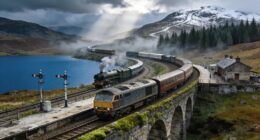
Heritage railway journeys demand advance booking since popular steam specials sell out fast—walk-up tickets are genuinely risky. The Heritage Railway Association oversees operations across 150 steam centers where over 2,500 preserved locomotives run actual tourist services, not static museum pieces. Passengers experience authentic Victorian technology through coal smoke, whistle sounds, and original brass fixtures on vintage coaches. Volunteer-powered conservation keeps these working railways operational under strict RIS-4472-RST safety standards. Understanding functional preservation versus climate-controlled storage reveals why these railways exist—and what makes them worth experiencing beyond surface-level tourism.
Tip #1 – Booking Heritage Tickets Secures Your Preserved Railway Lines Experience

Most heritage railways sell out their best trains before the day even arrives—that’s just reality. Walk-up sales? Good luck with that. If you’re looking to experience the charm of nearby destinations, consider day trips from Paris by train. You can easily travel to historic cities like Versailles or Giverny for a day filled with culture and exploration. Remember to check the schedules in advance, as popular routes can become quite busy, especially during peak tourist seasons.
Booking heritage tickets in advance means guaranteed seats on those steam specials everyone’s after, particularly on weekends and holidays. First-class compartments, observation cars, themed carriages? They tend to vanish fast.
Online booking systems let travelers pick exactly what they want—outbound and return journeys—with instant e-ticket confirmation. No surprises, no sold-out disappointments at the station.
On top of that, every advance purchase feeds straight into railway heritage conservation. These preserved railway lines run on volunteer labor and ticket revenue, which funds restoration work and keeps Victorian engineering alive.
It’s likely that early booking patterns help railways plan their sustainability efforts more effectively. Simple economics, really.
Even so, not every train sells out weeks ahead—midweek services in shoulder seasons may still have walk-up availability. But why risk it?
For those applying for HRA Privilege passes, plan ahead as processing and delivery may take a minimum of 14 days via recorded delivery. Many railways also use low-cost ticketing platforms that maximize revenue retention for ongoing operations. Modern luxury trains like the Venice Simplon-Orient-Express demonstrate how premium rail experiences continue to captivate travelers worldwide.
Tip #2 – Steam Locomotives: Powering Tourist Train Services Throughout Historic Routes
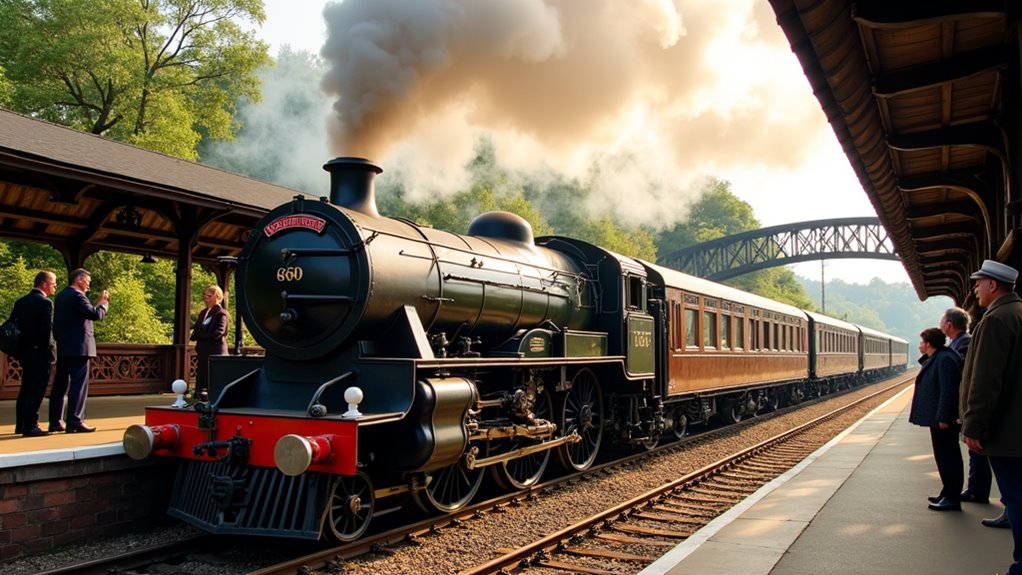
Steam locomotives remain the beating heart of UK heritage railway operations—no surprise there.
These iron beasts power tourist train services across standard and narrow gauge tracks, hauling historical rolling stock through countryside routes that’d otherwise gather dust.
Famous models like the Black Five and Castle Class headline special events, drawing crowds obsessed with steam locomotive spotting. Some heritage railways pull over 250,000 passengers annually.
That’s impressive for what’s fundamentally Victorian technology on wheels.
The Heritage Railway Association guarantees these operations meet rigorous engineering standards under RIS-4472-RST.
Makes sense—nothing kills tourism faster than a boiler explosion.
While steam trains may not match modern rail travel’s environmental efficiency, they offer heritage experiences that preserve railway history for future generations.
The HRA partners with ORR to produce public guidance documents that help maintain these safety standards across heritage railway operations. The Boiler Code of Practice Group manages expert guidance on steam locomotive maintenance and repair, ensuring operators follow current industry best practices.
Tip #3 – Spotting Steam Locomotives Reveals Historical Rolling Stock During Your Journey

Heritage railway passengers get more than a scenic ride—they’re basically time-traveling through Britain’s industrial past, one locomotive at a time. Spotting authentic rolling stock means catching vintage passenger coaches that haven’t seen mainline service in decades.
Some still carry their original brass fixtures and faded liveries that may give you a glimpse of what rail travel looked like when these carriages were new.
Railway photography techniques have evolved, sure, but enthusiasts still log every detail—class, number, livery—in notebooks like it’s 1952.
That said, locomotive restoration projects bring these machines back from the dead, complete with period fixtures and original logos. The Bluebell Railway and Didcot Railway Centre showcase these resurrections particularly well. It’s living history, minus the textbook boredom.
Even so, you need to know what you’re looking at. Train spotters can tell you whether that Great Western pannier tank is the real deal or just a good replica. Locomotive classifications organized by the Whyte System help enthusiasts identify different wheel arrangements and compare specifications across various engines.
On top of that, they’ll explain why that particular Pullman coach matters, what route it used to run, who might have ridden in it. The details pile up fast once you start paying attention.
Heritage railways like the Severn Valley and North Yorkshire Moors preserve steam locomotives that once dominated Britain’s rail network before diesel took over. Europe’s scenic routes like Austria’s Semmering Line demonstrate how historic railway engineering achievements have become cultural treasures worth preserving.
Tip #4 – Planning Railway Museum Visits Through Ticket Booking Before Departure

Showing up at a railway museum on a summer Saturday without a ticket and expecting to waltz right in? That’s unlikely to end well. Booking early guarantees entry when crowds swamp popular sites—and these days, that matters more than ever.
Museums implement timed slots now, no exceptions. Walk-ups get turned away while advance bookers stroll past.
On top of that, group bookings for families or railway clubs tend to secure better rates and dedicated guides. Some museums offer online-only discounts, which can add up if you’re bringing the whole family along.
Railway museum visits demand planning, especially during special events that appear to sell out fast. That said, it’s not just about you—museums need attendance forecasts for staffing volunteers properly.
Pre-booking integrates smoothly into heritage journey itineraries, too. Simple concept: reserve early, avoid disappointment. Consider coordinating museum visits with scenic train routes like The Canadian that connect major cities where railway heritage sites are often located.
Even so, the system works both ways. Museums get the numbers they need, and you get the experience you came for without standing in a queue only to be turned away. Advance ticket sales also help museums establish funding priorities and strategies for maintaining collections and developing educational programming. Many heritage rail organizations provide resources for education and research to enhance visitor understanding of railroad history.
Tip #5 – Why Preserved Railway Lines Enable Railway Heritage Conservation Experiences
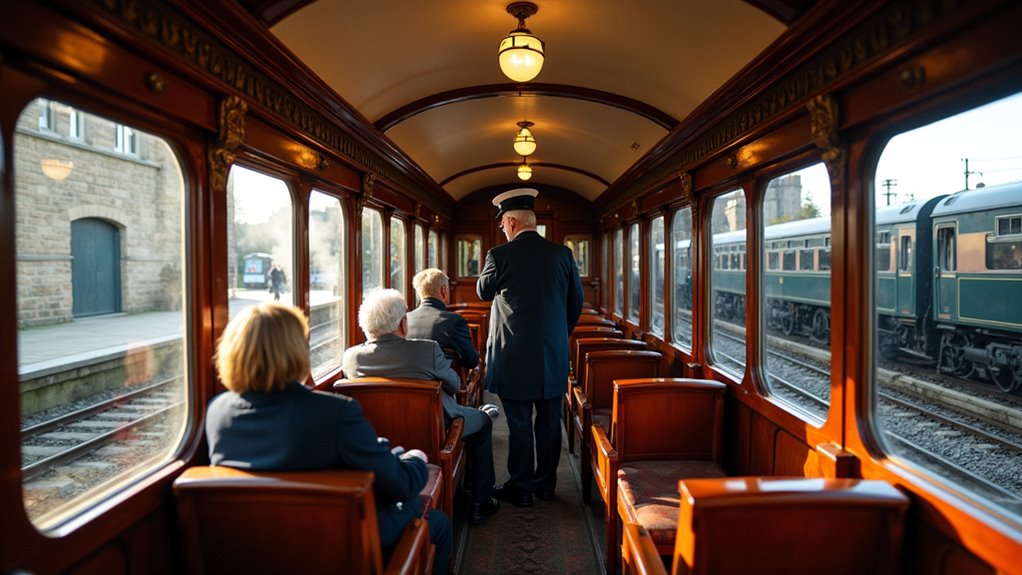
Static museum exhibits keep railway artifacts safe behind velvet ropes, sure—but preserved lines? They keep them *alive*. We’re talking locomotives that actually run, steam billowing, wheels clanking down real tracks. Heritage railways don’t just put 2,500+ locomotives on display. They operate them, day in and day out.
That’s conservation through action, not the passive kind where you squint at something under glass. Restoration crews rely on period-correct techniques, which means traditional engineering skills don’t just fade into dusty footnotes. They get passed down, refined, kept sharp.
Heritage railways preserve skills through doing—keeping traditional engineering techniques alive in the hands of working restoration crews, not archived in textbooks.
And the educational value? Living experiences beat static exhibits every time, at least in my view. Passengers smell the coal smoke. They hear the whistle cut through the air, feel that unmistakable rhythm under their feet. Modern heritage experiences can even rival spectacular routes like The Canadian, which showcases stunning landscapes across 2,762 miles from Toronto to Vancouver.
Conservation of historic rolling stock here means maintaining mechanics that actually *work*—not freezing them in time. The Heritage Railway Association seems to get this. Their John Coiley Award recognizes exactly this philosophy: real preservation demands operation, not retirement. The trophy itself—a safety-valve from a Hackworth-designed locomotive of the 1830s—embodies the organization’s commitment to honoring functional engineering history. This success is largely reliant on volunteers’ commitment to preservation, which has sustained over 150 steam railway centers across Britain.
That said, it’s a demanding approach—one that requires constant hands-on effort rather than climate-controlled storage. But for those who believe railways belong on the rails, it’s the only way forward. When planning your journey, it’s essential to understand the reservation requirements for interrail pass options, as these can vary significantly across different countries. Knowing the specific needs for each leg of your trip can help you avoid unexpected delays and make the most of your travel experience. This proactive approach allows adventurers to embrace the freedom of rail travel while ensuring a smooth ride.
Did You Know
How Does the Heritage Railway Association Support Volunteer Training Programs?
The Heritage Railway Association partners with groups like CIRO to expand training opportunities for volunteers.
They coordinate national seminars with regulators focusing on safety and operations.
Member railways get support developing accredited courses—everything from induction sessions to specialized skills like motorman training.
HRA even lobbies for youth volunteer rights and runs recognition programs.
Insurance coverage, networking forums, and continuous development keep volunteers engaged.
It’s systematic support across 300+ member organizations.
What Insurance Requirements Apply to Heritage Railway Passenger Operations?
Heritage railways must carry public liability insurance—it’s the law for passenger operations.
Employers’ liability coverage protects volunteers and staff.
Rolling stock and property insurance shields locomotives, carriages, and stations from damage.
The Heritage Railway Association’s insurance consortium gives members collective purchasing power, reducing costs.
The ORR won’t grant operational licenses without proof of adequate coverage.
Simple as that—no insurance, no trains.
Are Heritage Railways Accessible for Visitors With Mobility Challenges?
Heritage railways try, but accessibility is hit-or-miss.
The Equality Act pushes for inclusion, yet historic infrastructure wasn’t built with wheelchairs in mind. Some stations offer ramps and accessible toilets; others can’t retrofit without wrecking authenticity.
Rolling stock varies wildly—modern adaptations help, portable ramps exist, but step-free boarding isn’t guaranteed everywhere.
Staff assistance fills gaps where infrastructure fails.
Bottom line: accessibility depends heavily on which railway you visit.
How Do Heritage Railways Contribute to Local Rural Economies?
Heritage railways pump £600 million annually into local economies through tourism spending on hotels, restaurants, and shops.
They create 4,000 direct jobs and support thousands more in nearby businesses.
Towns like Bridgnorth and Pickering thrive on the footfall—13 million visitors yearly don’t just ride trains, they eat, sleep, and shop.
Railways also anchor regeneration projects, attracting outside investment and boosting rural property values.
It’s economic stimulation with nostalgia attached.
What Safety Standards Must Heritage Railways Meet for Public Services?
Heritage railways operating trains over 350mm gauge must comply with the Health and Safety at Work Act and Railway Safety Regulations (ROGS).
That means a formal Safety Management System—risk assessments, incident reporting, emergency plans, staff training, the whole deal.
The Office of Rail and Road oversees compliance and can enforce action if things go sideways.
Independent audits and competence verification aren’t optional.
Safety culture matters, even when you’re running Victorian-era locomotives.
Parting Shot
Heritage railways aren’t going anywhere—560 miles of track, 2,500 locomotives, and 22,000 volunteers make sure of that. The Heritage Railway Association keeps 173 railways running through regulations and standards that actually matter. Thirteen million visitors spend real money each year, £600 million worth. Book tickets early. Watch for steam engines. Visit the museums. Support preservation efforts. Britain’s railway history survives because people show up and pay attention. Pretty straightforward, really.