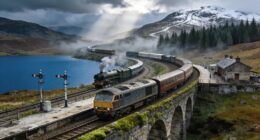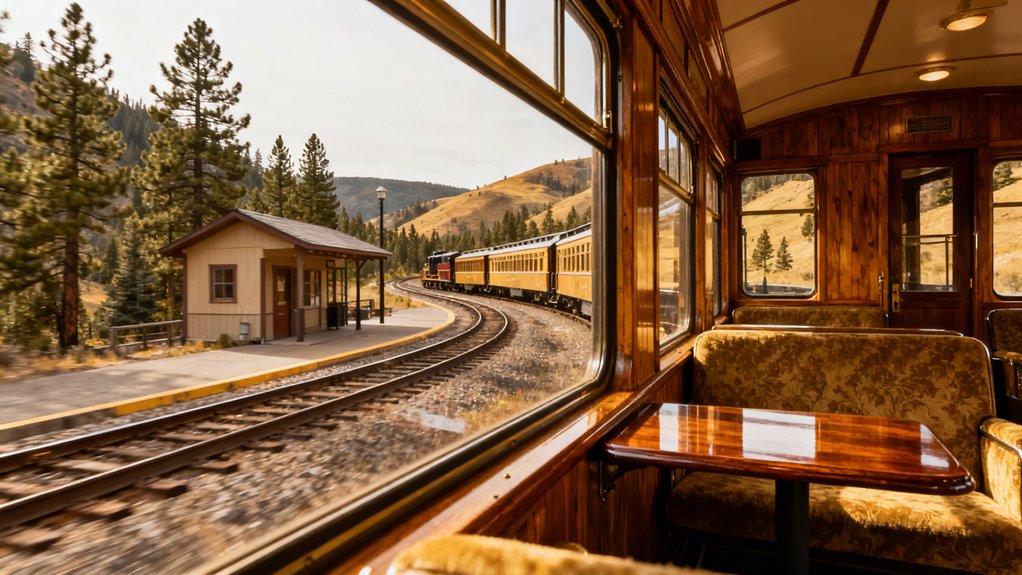
The Glacier Express earned its benchmark status by doing the opposite of what trains normally do—it slows everything down to 24 mph. Since 1930, this 291-kilometer crawl from Zermatt to St. Moritz has navigated 91 tunnels and crossed UNESCO World Heritage landscapes through panoramic windows. While the Orient Express offers history and the Trans-Siberian claims distance, the Glacier Express perfected scenic luxury by turning an eight-hour journey into pure spectacle. The full story behind its dominance reveals how geography, engineering, and timing created an untouchable standard. Travelers on the Glacier Express are treated to breathtaking views on the glacier express that showcase Switzerland’s majestic mountains and serene valleys. With each twist and turn of the route, passengers are immersed in a visual feast that highlights the stunning beauty of the alpine landscape. This experience transforms the railway journey into an unforgettable adventure, inviting guests to pause and appreciate the natural wonders unfolding before them.
Why The Orient Express Set The Gold Standard For Historic Luxury Train Travel
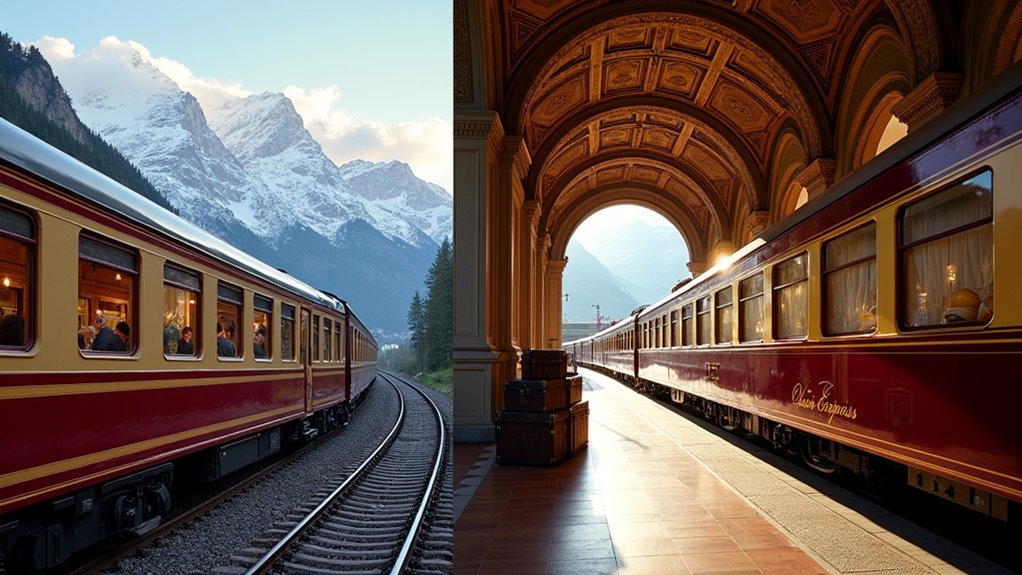
The Orient Express didn’t just happen. Belgian entrepreneur Georges Nagelmackers founded it in 1883, inspired by American Pullman cars but determined to outdo them.
He created the Compagnie Internationale des Wagons-Lits, coordinating with national rail companies to run luxury sleeping and dining cars across Europe. That inaugural Paris-to-Constantinople journey? Seven days with just forty passengers. But it worked.
Opulent interiors featured Art Nouveau design. Gourmet meals prepared onboard. Attentive service that redefined what train travel could be. The modern Venice Simplon-Orient-Express continues this legacy with authentic 1920s Art Deco elegance that preserves the original spirit of luxury rail travel.
Lavish Art Nouveau décor, gourmet cuisine, and impeccable service transformed rail travel from mere transportation into an unforgettable luxury experience.
The whole thing was a gamble, really—coordinating schedules and standards across multiple countries’ railways was no small feat. Even so, CIWL pulled it off and set the benchmark. The route spanned approximately 1,700 miles across France, Germany, Austria, Slovakia, Hungary, Romania, Bulgaria, and Turkey. By 1889, the completed line enabled direct service from Paris to Constantinople with an arrival time of 67.5 hours. Everything else followed.
The Venice Simplon Orient Express: Preserving European Grandeur Through Modern Scenic Luxury
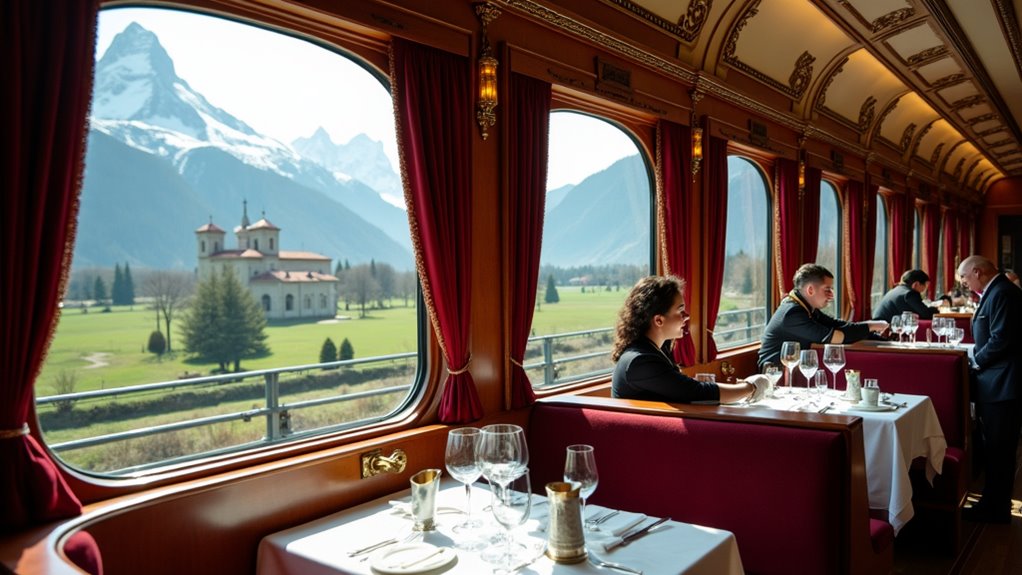
How does someone resurrect a ghost train? James Sherwood pulled it off in 1982, spending $16 million to hunt down original carriages at auctions across Europe.
These weren’t replicas—they were actual Wagons-Lits cars built between 1926 and 1949, each carrying its own peculiar history. Carriage 3544 apparently served as a WWII brothel. Carriage 3309 is said to have inspired Agatha Christie’s famous murder mystery.
Now owned by Belmond, the Venice Simplon-Orient-Express runs routes from London to Venice, Paris to Istanbul. Modern travelers can reach Paris from major European cities like Amsterdam in just over three hours via high-speed rail, making connections to luxury services more accessible than ever.
Recent fares? £35,000 for a solo traveler in the smallest cabin. That buys you Art Deco marquetry, gourmet dining cars, and what amounts to pure nostalgia repackaged as modern luxury. The original Orient Express service connected Paris to Romania when George Nagelmackers launched it in 1883, complete with sleeping and restaurant cars that set the standard for luxury rail travel. The service reached its golden age in the 1920s, when it became synonymous with celebrities and spies traveling through post-war Europe. The allure of the orient express continues to captivate travelers with its promise of adventure and luxury on the rails. Each journey offers an escape into a world where time seems to stand still, allowing guests to savor exquisite cuisine and breathtaking landscapes. As the train glides through picturesque scenery, the stories of its illustrious past echo in every car, inviting passengers to be part of its ongoing legacy.
How The Trans Siberian Railway Route Redefined Epic Luxury And Scenic Rail Adventure
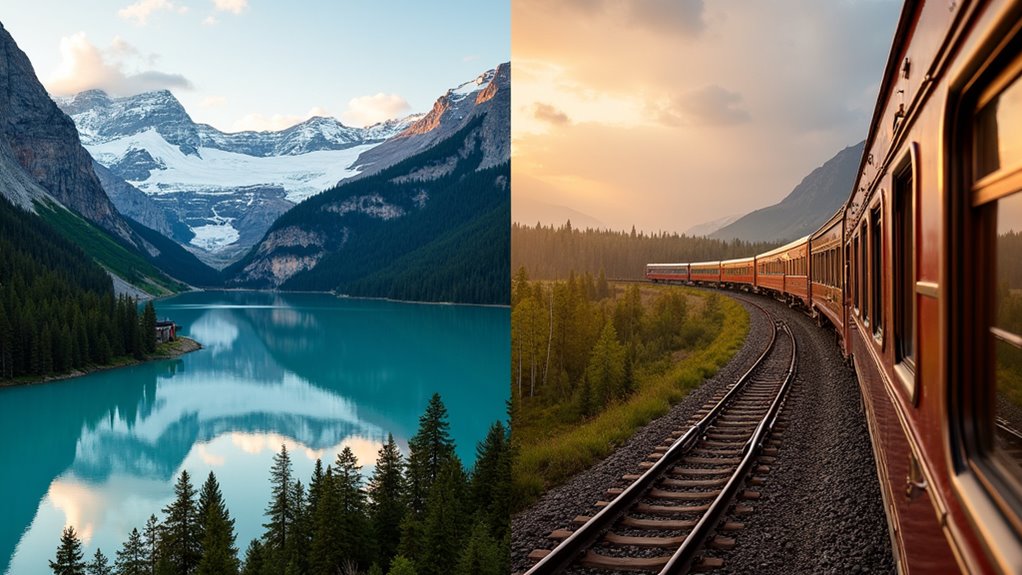
When Tsar Alexander III ordered construction to begin in 1891, nobody really grasped what they were attempting.
The scale of ambition exceeded comprehension—building a railroad across an entire continent with technology that barely existed yet.
Twenty-five years later, they’d built the longest continuous passenger rail journey on Earth—9,288 kilometers spanning eight time zones, 16 major rivers, and 87 cities.
The engineering was brutal. Laying track over permafrost and mountains from Moscow to Vladivostok required solutions nobody had invented yet.
Workers faced conditions that seem almost unimaginable now—frigid temperatures, unstable ground that shifted with the seasons, terrain that fought back at every turn.
Over 85,000 individuals participated in the massive construction effort that transformed Russia’s infrastructure.
The original route began at Moskovsky Railway Station in St Petersburg before shifting to Moscow after the 1917 Revolution.
Today’s luxury cabins with en suite facilities and gourmet dining cars barely resemble the original trains.
That said, some things haven’t changed. Crossing Lake Baikal while watching Siberian wilderness unfold through panoramic windows?
That experience likely captures what the original planners hoped for, even if they couldn’t have imagined the comfort level.
It redefined what epic rail travel could mean.
While Canada’s The Canadian offers similar transcontinental luxury across 2,762 miles of diverse landscapes, the Trans-Siberian remains unmatched in sheer scale and historical significance.
Pure geographic theater, stretched across a continent.
The Glacier Express Scenic Journey Remains The Global Benchmark For Scenic Luxury Rail
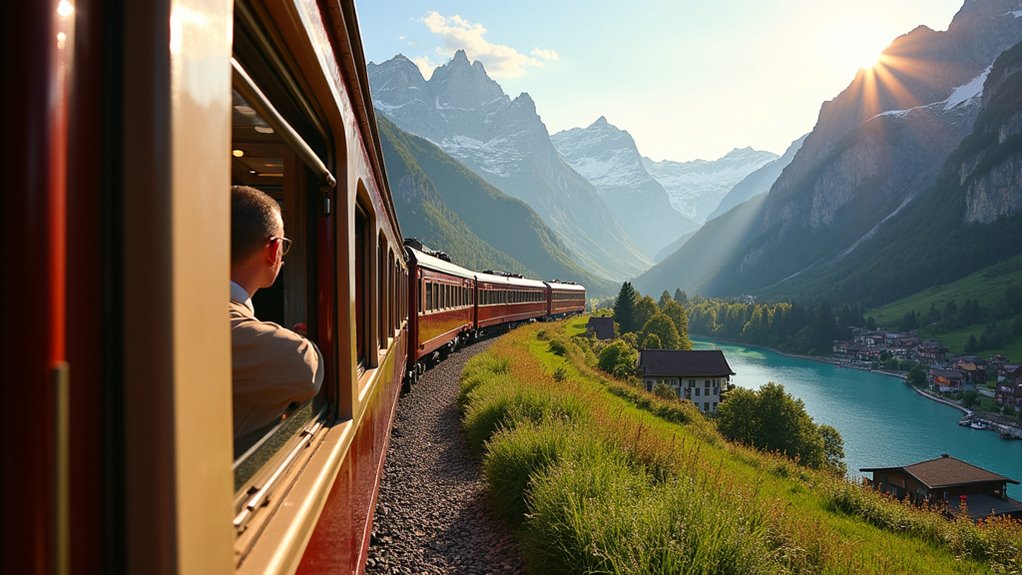
While Russia stretched rail ambitions across frozen steppes and mountain ranges, Switzerland took a different approach—compress the drama into 291 kilometers and make every meter count.
The Glacier Express has crawled between Zermatt and St. Moritz since 1930, inching along at 24 mph through 91 tunnels and across 291 bridges. It’s literally marketed as the “slowest express train in the world.” That’s the pitch. Traveling on the Glacier Express offers a breathtaking experience that immerses passengers in the stunning Swiss landscape. An itinerary for glacier express journey often includes panoramic views of majestic mountains, lush valleys, and serene lakes that are simply unforgettable. Each leg of the journey is meticulously planned to enhance your appreciation of the natural beauty that surrounds you.
The route maxes out at 2,033 meters at Oberalp Pass, cutting through UNESCO World Heritage landscapes.
Those panoramic windows? Designed specifically for uninterrupted gawking. First and Excellence class passengers get gourmet dining, local wines, dedicated concierges—the works.
This became the benchmark other scenic railways measure themselves against, though whether any eight-hour rail journey can truly justify premium pricing is another question entirely. By contrast, China’s high-speed rail system prioritizes efficiency and speed over leisurely sightseeing, with G-class trains reaching speeds that would complete the Glacier Express route in under two hours.
Even so, the formula appears to work: deliberate slowness positioned as luxury, alpine spectacle packaged as exclusivity. The operation was born from collaboration between BVZ Zermatt-Bahn AG and Furka Oberalp Bahn AG, later expanding into a partnership with Rhaetian Railway. Passenger numbers prove it—jumping from 20,000 in 1982 to over 80,000 by 1984 after year-round service began.
What Makes The Ghan Elevate Outback Adventure To New Levels Of Luxury
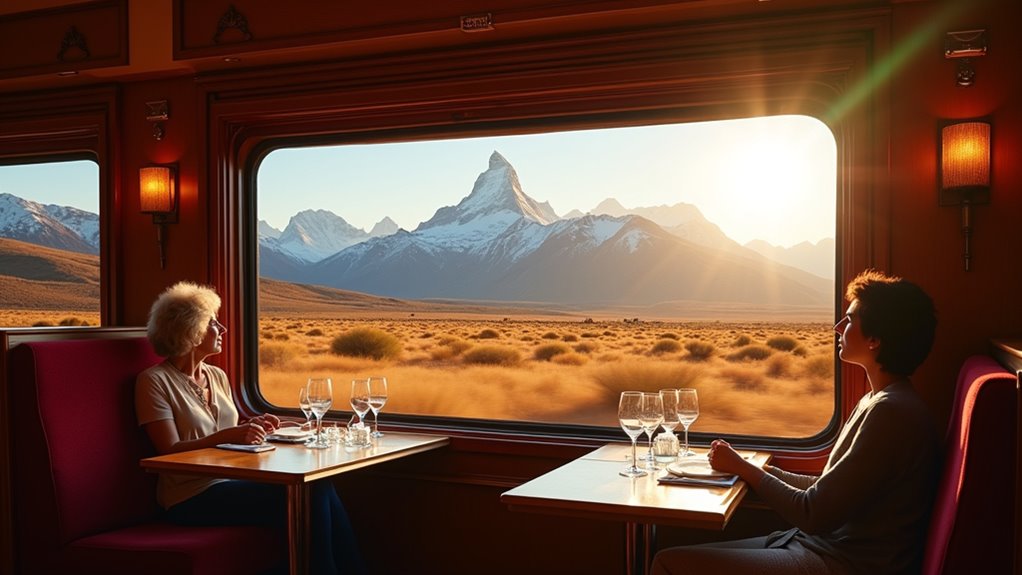
The Ghan cuts a nearly 3,000-kilometer path from Adelaide to Darwin, and calling it a train journey feels like an understatement—it’s more like demolishing the outback with unapologetic luxury. Exploring unforgettable train journeys in Peru offers a completely different experience, weaving through majestic landscapes adorned with ancient ruins. Each route unveils vibrant cultures and breathtaking scenery, transforming the journey into a remarkable adventure that lingers in memory. From the heights of the Andes to the lush valleys below, every mile tells a story waiting to be discovered.
The Ghan doesn’t just cross the outback—it steamrolls through it wrapped in champagne-soaked opulence.
Platinum suites roll through desert moonscapes delivering hotel-grade comfort, butler service included, along with Champagne Bollinger on demand. Come 2026, the experience appears set to get even more extravagant: Australis and Aurora Suites will offer three times the space of current Platinum cabins, complete with king beds and separate living areas.
That said, the real draw might be what happens when you step off the train.
Excursions in Alice Springs and Katherine Gorge provide access to landscapes most tourists never reach—exclusive spots that justify the premium price tag. On board, Gold Premium and Platinum guests tackle gourmet Australian fare while staff seem to read minds, anticipating preferences before you voice them. Like Peru’s Belmond Andean Explorer, The Ghan demonstrates how luxury rail travel transforms scenic routes into cultural immersion experiences that connect passengers with the landscapes they traverse.
The Ghan Expedition operates March through October, adding seasonal stops nobody else can book. Booking a year in advance proves especially critical for Platinum Service, where demand consistently outpaces availability during peak travel windows.
Even so, the experience demands a certain tolerance for confined luxury and regimented schedules—not everyone’s idea of outback adventure, but undeniably effective at turning a continent-crossing rail trip into something closer to theater. For those seeking entry-level luxury, Gold cabin packages start from AUD 2,990 and include private en-suite bathrooms, panoramic windows, and all meals in the Queen Adelaide Restaurant.
The California Zephyr And Rocky Mountaineer: Rivals In North American Scenic Luxury
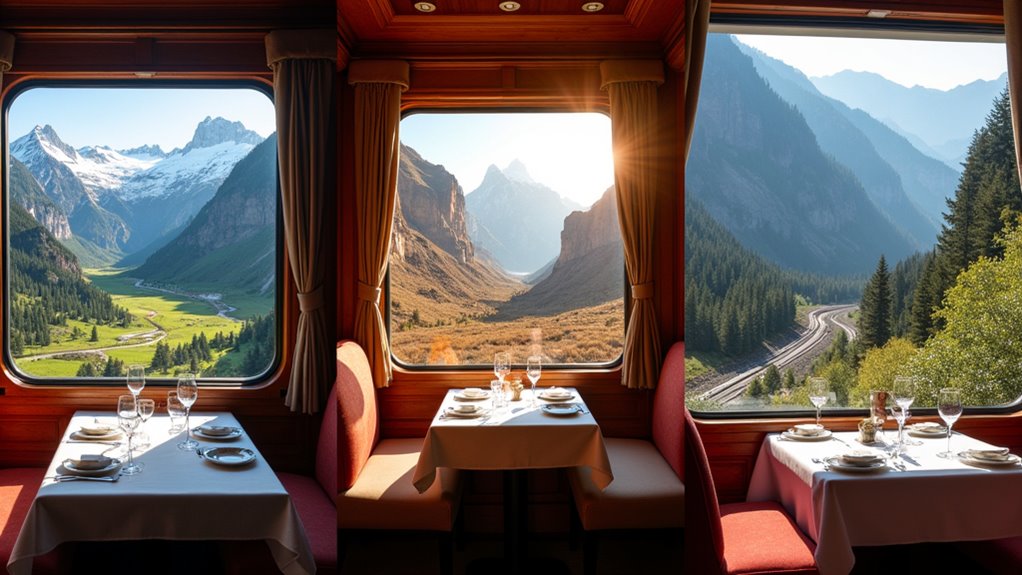
The Ghan owns the Australian outback. In North America, though, the scenic luxury rail scene splits down the middle into two very different philosophies.
You’ve got the California Zephyr—2,438 miles from Chicago to San Francisco, crossing both the Rockies and Sierra Nevada on Amtrak’s budget-friendly fare structure.
Then there’s Rocky Mountaineer, which takes the premium route with glass-dome coaches, gourmet meals, and hotel overnights instead of sleeper cars.
The Zephyr tends to attract families and rail enthusiasts willing to sacrifice some luxury for accessibility. For end-to-end travel, prices are roughly double on Via Rail’s Canadian compared to the California Zephyr.
Rocky Mountaineer? That’s a different story—$1,400 to $2,100+ per person, pricing that’s comparable to safari territory. Rocky Mountaineer has been operating high-end rail tours in Canada for over 30 years.
VIA Rail also operates The Canadian from Toronto to Vancouver, offering transcontinental overnight trips with sleeper accommodations through key stops like Winnipeg, Edmonton, and Jasper.
Even so, both journeys traverse the same stunning Colorado River canyons and mountain passes.
Different philosophies, sure, but the landscapes are equally jaw-dropping.
How The Blue Train Competes Globally By Showcasing African Luxury Rail And Scenic Wonder
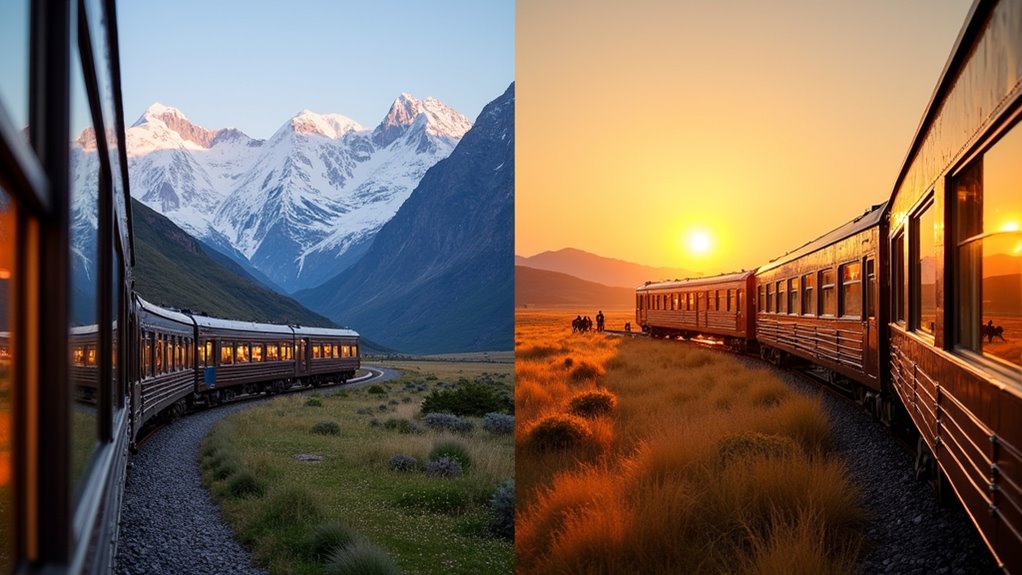
The Blue Train has been running through South Africa since 1923, and over the years it’s quietly racked up five “World’s Leading Luxury Train” titles at the World Travel Awards.
The flagship route? A 994-mile journey from Cape Town to Pretoria that cuts through Karoo desert, sprawling wine country, and mountain passes that seem to trace the whole diamond-and-gold-rush history of the region.
A 994-mile passage through desert, vineyards, and mountain passes that quietly tell the region’s gilded history.
You get butler service. Gourmet meals served on Irish linen. All-suite cabins with proper en-suites. It’s essentially a five-star resort that happens to move on rails. The oak-panelled heritage carriages meet modern conveniences—WiFi, air conditioning, the works. If you want to push deeper into the continent, optional Victoria Falls extensions are on offer.
The journey takes twenty-seven hours, with passengers observing a formal dress code for the evening dinner service—gentlemen in jackets and ties, the full affair.
Each suite comes equipped with flat-screen entertainment systems and a safe for valuables, with guests choosing their preferred bedding arrangement during reservation.
While Japan’s transit planning apps have revolutionized modern rail travel with features like real-time delays and digital ticketing, the Blue Train represents a more traditional approach to luxury rail experiences.
That said, while the Glacier Express owns those alpine panoramas everyone recognizes, the Blue Train appears to own something else entirely: a version of luxury that’s been shaped by a whole continent’s story.
Whether that story resonates with you may depend on what you’re looking for in a rail journey—some travelers want the mountains, others want the narrative.
The Reunification Express Preserves The Heritage Of Scenic Luxury Rail Through Southeast Asia
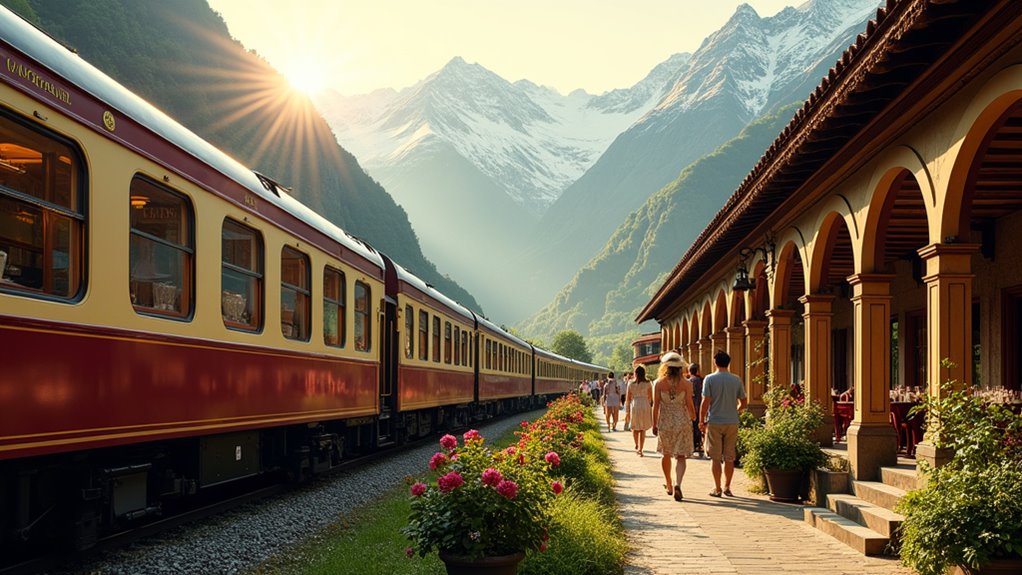
From South Africa’s polished wine country elegance, the rail conversation shifts east—way east—to a train that wasn’t built to impress tourists with butlers and crystal.
The Reunification Express runs 1,726 miles from Hanoi to Ho Chi Minh City, tracing a line finished in 1936, bombed to hell during decades of war, then rebuilt in under two years after 1975. They reconstructed 1,334 bridges and 27 tunnels. Fast.
This isn’t about panoramic glass roofs. It’s about rice paddies and fishing villages. A country that refused to stay broken.
Some would argue it’s Southeast Asia’s most historically significant rail journey, period—and honestly, it’s hard to find much competition. In comparison, the travel cost comparison for Copenhagen to Stockholm reveals a different type of journey, where scenic views meet urban experiences. Travelers often seek the most efficient routes, weighing options between plane and train. Ultimately, the choice depends on budget, time, and personal preference, but each path offers a unique glimpse into the rich cultures of both cities.
The experience feels raw in ways luxury rail tours deliberately avoid. No white-gloved attendants, no meticulously curated wine pairings.
Just the landscape rolling past—sometimes breathtaking, sometimes monotonous—and the quiet knowledge that this particular stretch of track represents something bigger than scenic tourism.
That said, calling it purely utilitarian misses the point too. There’s a kind of understated grandeur in watching the Vietnamese coastline unfold from a carriage window, knowing the rails beneath you were reassembled from rubble in less time than most countries spend on environmental impact studies. The route threads through the iconic Hải Vân Pass, where the South China Sea crashes against tunnels carved into mountainside, offering views that rival any luxury rail experience without trying to. Vendors wander through carriages selling simple foods and drinks, a practice that’s remained unchanged for decades. While the journey can involve crowded conditions typical of utilitarian rail travel, passengers accept this as part of the authentic experience that connects them to Vietnam’s resilient spirit.
Did You Know
What Is the Best Time of Year to Book the Glacier Express?
Late spring (May to early June) and early September hit the sweet spot for booking the Glacier Express.
The scenery’s stunning—think snow-capped peaks meeting blooming valleys—but without the summer madness. Fewer tourists. Better availability. More reasonable pricing.
Summer (June-September) books out months ahead, and winter’s equally packed.
Want Excellence Class? Book literally as far in advance as possible. The train shuts down mid-October through early December anyway, so plan accordingly.
How Much Does a Glacier Express Ticket Cost in Different Service Classes?
Glacier Express tickets for the full St. Moritz-Zermatt route in 2025 run about CHF 152-169 in 2nd Class, CHF 268-297 in 1st Class, plus a mandatory CHF 49 seat reservation for both.
Excellence Class costs CHF 470 all-in—that price includes the five-course meal, wine, drinks, and fancy concierge treatment.
Shorter segments cost less. Swiss Travel Pass holders can upgrade to 1st Class for a fee.
Can Children Travel on the Glacier Express and Are There Family Discounts?
Kids under 6 ride free if they don’t need their own seat—otherwise just pay the reservation fee.
Ages 6-16 get half-price tickets but still fork over the full adult reservation cost.
The Swiss Family Card lets children 6-15 travel free with parents who have a Swiss Travel Pass, though seat reservations aren’t included.
Book early—this train fills up fast.
What Should I Pack for an Eight-Hour Glacier Express Journey?
Passengers should pack layers—breathable shirts, fleece, waterproof jacket—since temperatures shift dramatically across altitudes.
Sunglasses, sunscreen, and lip balm are essential; UV exposure hits hard even through panoramic glass.
Comfortable shoes, toiletries, medications, and a refillable water bottle cover basics.
A daypack holds essentials and snacks.
Camera or phone, fully charged. Binoculars improve distant views.
Winter travelers need thermal layers and gloves.
That’s it—straightforward packing for eight hours.
Are There Wheelchair-Accessible Carriages on the Glacier Express?
Yes, the Glacier Express offers wheelchair accessibility, but with serious limitations.
There’s exactly one designated wheelchair space per train—seat 11 in 1st class—and it requires booking at least 24 hours ahead.
The accessible toilet is also in 1st class only.
Station staff help with boarding, and meals are served at-seat.
Power wheelchairs are allowed with advance notice.
Not exactly abundant options, but it exists.
Parting Shot
The Glacier Express doesn’t just compete with the world’s legendary railways—it defines what scenic luxury rail should be. Eight hours through 291 bridges and 91 tunnels at a gloriously slow 36 km/h. That’s the standard. While the Orient Express trades on nostalgia and the Trans-Siberian boasts sheer distance, the Swiss route engineered the blueprint: unobstructed views, gourmet service, year-round reliability. Everything else measures itself against those panoramic Alpine curves. Simple as that. The breathtaking views on Darjeeling Himalayan Railway offer an equally mesmerizing experience, as trains wind through lush tea gardens and towering mountains. Passengers are treated to a unique perspective of the vibrant landscape, enhanced by the melodic sound of the steam engine. Each curve reveals new vistas that captivate the soul, much like the Alpine routes of Europe.