European Train Travel by Night: How to Sleep Your Way Across Europe by Rail
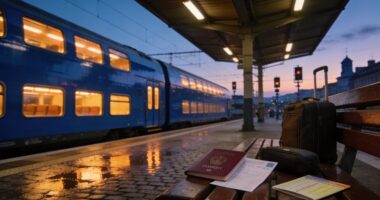
Night trains: a transportation method that connects major European cities while passengers sleep. Travelers board in one country and wake in another. Borders pass in darkness. The journey replaces the need for airport hotels and morning flights. planning your first sleeper train trip can be an exciting adventure. Picture yourself drifting off to sleep as the train glides through picturesque landscapes, only to awaken refreshed at your destination. Plus, you’ll have the unique opportunity to meet fellow travelers from diverse backgrounds along the way.
- Couchette compartments offer budget-friendly sleeping berths with shared accommodations for four to six passengers
- Private sleeper cabins provide en-suite facilities including showers and breakfast service
- Scenic rail corridors link destinations like Paris to Barcelona and Amsterdam to Vienna
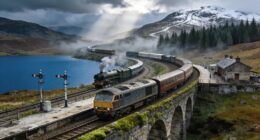
European rail operators run overnight services across the continent. The Austrian Federal Railways operates extensive sleeper networks. Swedish and German railway companies have expanded night routes in recent years. Passengers choose between seat classes, shared couchettes, and private compartments based on budget and comfort needs.
The night train experience combines practical travel with adventure. Stations in major cities serve as departure points. Dining cars offer evening meals. Conductors manage passport checks while travelers rest. Morning arrivals place passengers in city centers, ready to explore.
Rail travel produces lower carbon emissions than air travel. This environmental benefit drives renewed interest in overnight services. Booking platforms show increased demand for sleeper routes. New rolling stock enters service across multiple operators.
Interesting Fact: The original Orient Express, launched in 1883, pioneered luxury overnight rail travel and connected Paris to Constantinople, establishing the template for modern European sleeper services.
Sleeper Trains in Europe: Complete Route Guide

While budget airlines spent decades convincing you that cramped seats and baggage fees were somehow acceptable, something else was happening across the continent.
Quietly.
Steadily.
European sleeper trains were staging a comeback.
Sleeper trains are returning—not as nostalgia, but as rebellion against everything air travel taught us to tolerate.
The Europe night train network now stretches from Prague to Brussels, from Vienna to Amsterdam—a web of overnight connections that grows larger each year.
Nightjet routes in 2026 will link major hubs like Munich and Rome on nightly schedules, carrying passengers through darkness while cities sleep below.
Consider what this means: you board in one country, close your eyes, and wake in another.
No airport security lines; no 4 a.m. alarms; no middle seats.
Why would anyone choose a red-eye flight when they could choose this instead?
Top night train destinations in Europe read like a bucket list—Berlin, Venice, Budapest.
These aren’t obscure stops.
They’re the cities travelers dream about.
And sleeper train routes across Europe keep expanding, adding corridors, adding frequencies, adding possibilities.
Real beds.
That’s what European night trains offer.
Not reclining seats that mock the concept of rest.
Not neck pillows as consolation prizes.
Actual beds with actual blankets in actual private compartments.
The newest Nightjet fleet features upgraded sleeper cabins with private toilets and showers.
Transformative.
The rhythm of rail travel invites reflection; the gentle sway becomes a kind of meditation.
Wheels click against tracks in hypnotic repetition, and somewhere between departure and dawn, the journey itself becomes the destination.
Budget airlines promised efficiency.
Sleeper trains deliver something rarer: time that doesn’t feel stolen.
Prague to Brussels.
Vienna to Amsterdam.
Munich to Rome nightly.
The routes exist.
The beds are waiting.
Tools like the Eurail Planner app help travelers map these overnight journeys and find the best connections across the continent.
European Sleeper is filling the gaps left by discontinued Nightjet services, launching Paris–Brussels–Berlin routes three times weekly from March 2026.
The comeback is no longer quiet—it’s a movement, a shift, a return to the way travel once felt before we accepted less and called it progress.
Save Hotels and Time on European Night Trains
Travelers overlook the math. They overlook it constantly. They overlook it to their own detriment—and that’s precisely why the real value of night trains hides in plain sight.
Consider what happens when you board an evening departure in one European city, settle into your berth as the platform lights slide past, feel the gentle rhythm of rails beneath you through the dark hours, and wake to find yourself hundreds of kilometers away with morning light streaming through the window.
You’ve traveled. You’ve slept. You’ve saved.
The numbers tell the story.
Budget sleeper train tickets across Europe run €50–174. Hotels? They average €109 per night.
Already you can see the equation shifting. But here’s where it gets interesting: that sleeper fare replaces two expenses simultaneously—transportation and accommodation. One payment; two problems solved.
Now the choice of comfort enters the picture. Couchette or private sleeper? The couchette offers shared space, budget-friendly and social. The private sleeper delivers solitude, a door that locks, sheets that feel like intention. Book a private cabin and you’ll find complimentary breakfast delivered to your door—caffeinated tea, yogurt, and hard rolls with Nutella and jam included.
Which matters more to you tonight?
Want to push the savings further? Look east. The Vienna–Warsaw route drops to €27.90. Twenty-seven euros and ninety cents to cross borders while dreaming. Remarkable.
This overnight rail travel approach demands a shift in thinking. Stop separating lodging from transit in your budget spreadsheet; they merge on the rails. Stop assuming flights save money when airport hotels and early taxis eat your margins. Stop believing the cheap option means the uncomfortable option. Night trains offer something hotels simply cannot—the experience of waking in a new country while saving hours you would otherwise lose to daytime transit. Many night trains also feature dining car services where you can enjoy a meal before settling into your berth for the evening. To enhance your experience, consider effective strategies for packing rail journey essentials. A well-organized bag not only maximizes comfort but also ensures you have everything you need for both the journey and your destination. Think about packing a light blanket, snacks, and entertainment to make your overnight trip even more enjoyable.
Three stops. Three shifts. Three savings waiting for anyone willing to do the simple arithmetic that most travelers never attempt.
The night train doesn’t just move you across Europe. It moves you smarter.
What Really Happens Inside a Sleeper Cabin?

What Really Happens Inside a Sleeper Cabin?
How cramped is a sleeper cabin, really?
That depends. It depends on your budget. It depends on your chosen route. And it depends—more than anything—on the cabin type you book.
Step inside a couchette, and you’ll find four to six berths stacked along the walls; the space feels efficient, almost military in its practicality, with basic bedding folded neatly on each narrow mattress and a shared bathroom waiting somewhere down the corridor.
Now picture the deluxe sleeper: here, only one to three berths occupy the room, a private shower hides behind a sliding door, and lounge access awaits you at the end of the carriage.
The difference is stark.
Cozy or spacious—the private sleeper cabin interior spans that entire spectrum.
You could stretch out beneath crisp sheets with moonlight streaming past the curtain.
You could curl into a compact berth while the rails hum beneath you.
Both experiences belong to night train travel.
What stays consistent across every class?
The overnight rail comfort items.
Blankets, pillows, USB ports—these come standard whether you’ve chosen the budget option or splurged on luxury.
A warm cocoon awaits regardless of price.
Consider what matters most to you: elbow room, solitude, the indulgence of hot water on demand.
Or perhaps you prefer the camaraderie of shared quarters, strangers becoming temporary companions as cities blur past in darkness.
Neither choice is wrong.
The gap between couchette and deluxe sleeper is real—measured in square footage, in amenities, in the quality of your morning coffee. For those seeking the ultimate in rail luxury, North American luxury trains like the Rocky Mountaineer feature dome observation windows and gourmet dining that take the sleeper experience to extraordinary heights.
But the rhythm of the rails?
The gentle sway that rocks you toward sleep?
That magic crosses every class boundary.
Book your berth. Expect beds measuring around 60 cm wide with lengths averaging 175 to 185 cm—compact, but designed for restful slumber. Modern sleeper cabins now include amenities like wireless charging pads, reading lights, and multiple outlets to keep your devices powered through the night.
The night awaits.
Top 10 Overnight Train Routes Across Europe
Ten routes. Ten overnight train journeys. Ten chances to wake up in a new country.
Across Europe, sleeper trains are staging a quiet revolution—and you should pay attention.
Europe’s sleeper trains are quietly reclaiming the night—and reshaping how we think about travel.
Basel to Malmö launches in April 2026, carrying dreamers across borders while they sleep, the train eventually gliding over the Öresund Bridge as dawn breaks over Scandinavian waters. As the region evolves, SJ’s departure from StockholmBerlin marks a significant new chapter in trans-European travel. This service promises to connect cities and cultures, enhancing accessibility for travelers eager to explore beyond their borders. With every journey, passengers will find themselves integrated into a tapestry of stories and experiences that span the continent.
From Amsterdam, another route winds its way to Milan, threading through the Swiss Alps in darkness; passengers drift off in the Netherlands and rise to Italian espresso. European Sleeper launches this Brussels-to-Milan connection on June 18, 2026, with a stop in Bern along the way.
Zurich to Zagreb? This daily service crosses five countries in a single night. Five. The route passes through Liechtenstein without stopping, a tiny country glimpsed from your window.
Consider what these journeys offer: cities connected without airports, without security lines, without the sterile hum of departure lounges. Night trains represent one of several train types crisscrossing the continent, alongside high-speed services, scenic routes, and regional connections.
Berlin to Gothenburg delivers beautiful overnight railways, European-style—forests and coastlines sliding past windows while you rest in a private cabin. For those considering air travel benefits for copenhagen journeys, the convenience of direct flights can save considerable time. Visitors can quickly immerse themselves in the vibrant culture and stunning architecture of Denmark’s capital. With numerous options for transportation upon arrival, exploring the city becomes a seamless experience.
The rhythm of tracks beneath you becomes a lullaby.
But not every route runs smoothly.
Paris to Berlin and Paris to Vienna nearly vanished from the timetables; these beloved connections teetered on the edge of extinction, schedules threatened, futures uncertain.
Then came the rescue.
Revived.
Why fly when you can sleep your way across a continent?
Affordable overnight rail routes exist for budget travelers and romantics alike.
You can book a couchette, stretch out in a sleeper compartment, or simply recline and watch the night pass—cities glowing, then fading, then giving way to countryside darkness.
Short hauls. Epic crossings. Alpine tunnels and Scandinavian bridges.
Europe’s overnight trains are returning, expanding, multiplying.
The tracks are waiting.
Book a berth.
Wake Up in a New Country by Night Train
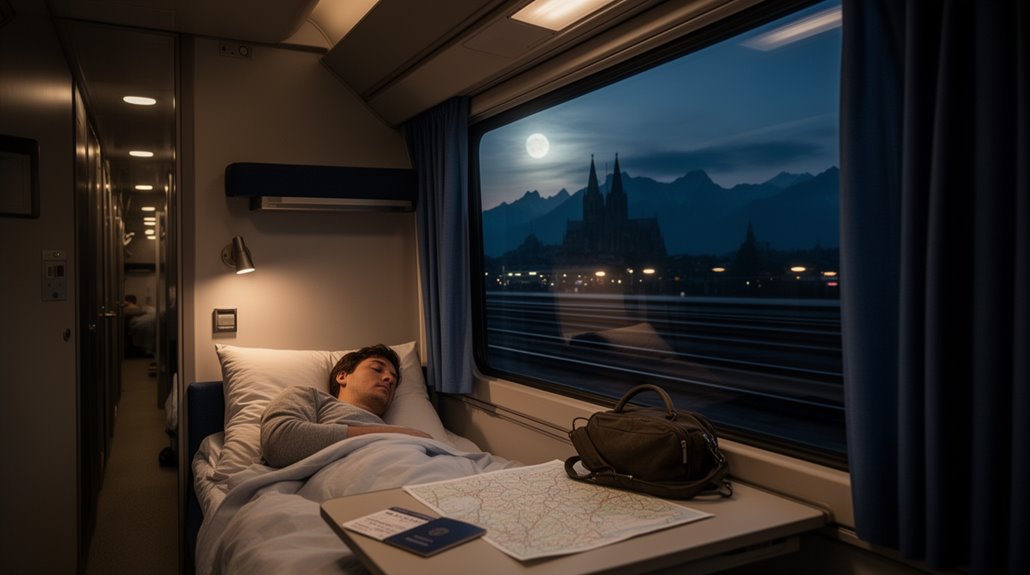
When the sun rises over the Öresund Bridge, something extraordinary happens.
Passengers on the Basel-to-Malmö route stir in their bunks, drawn toward windows still cool from the night; they press their faces close, watching light spill gold across the water, and in that moment, sixteen hours of gentle swaying through darkness becomes worth every minute of lost sleep.
Scenic dawn arrivals hit different by rail. They hit deeper. They hit permanent.
But here’s the thing—your journey begins long before boarding.
Which cabin will you choose? The decision matters more than you might expect: a private sleeper for solitude, a shared couchette for conversation, or perhaps something in between. On new-generation Nightjet trains, solo travelers can book individual sleeping pods called Mini-Cabins for a balance of privacy and affordability.
Study the overnight route map carefully; trace the path through countries you’ll cross while dreaming.
Consider the timing of it all—when you’ll fall asleep, when morning light will find you, which landscape will greet your waking eyes.
Sixteen hours aboard a night train changes you.
The rhythm of wheels beneath you becomes a lullaby, rocking you through borders and time zones, carrying you from one world into another while cities blur past in darkness.
You close your eyes in Switzerland. You open them in Sweden.
A sunrise city arrival by rail offers something no flight ever could: anticipation building as the train slows, the gradual reveal of a new skyline painted in morning colors, that electric feeling of stepping onto a platform in a place you’ve never been—rested, ready, transformed.
Airports rush you through. Trains ease you in.
So book the sleeper. Plot the route. Set no alarm.
The Santa Claus Express can even carry you from Helsinki to the Arctic Circle, where the Northern Lights await your arrival.
The Öresund Bridge at dawn? Unmatched.
For those who prefer daytime travel, Europe’s scenic routes like the Bernina Express between Switzerland and Italy offer UNESCO World Heritage views through alpine landscapes.
Nightjet Packing List: Overnight Rail Essentials
That sunrise over the Öresund Bridge can take your breath away. It can paint the water gold and make the whole journey worthwhile. It can become the memory you carry home forever—if you slept at all.
Freeze through the night, and you’ll miss it. Spend hours dehydrated, and you’ll miss it. Listen to a stranger’s thunderous snoring until 4 a.m., and you’ll definitely miss it. But pack smart? Everything changes.
Pack smart or miss the magic—preparation is the difference between surviving overnight rail and savoring it.
Start with noise-canceling headphones; they transform a rattling carriage into a sanctuary. Bring a refillable water bottle: hydration matters more than you think when recycled air pulls moisture from your skin hour after hour. A double-insulated stainless steel bottle keeps drinks cold up to 24 hours, perfect for the long overnight haul.
Layers prove essential too, because train temperatures swing wildly between sauna and icebox, sometimes within the same corridor, sometimes within the same hour.
Now consider comfort. Loose clothing lets you actually rest. Slip-on shoes make those midnight bathroom trips bearable. An inflatable pillow—small, packable, surprisingly luxurious—cradles your head against the vibrating window. Before you pack, make sure to understand baggage allowances so you don’t overload your compartment with unnecessary bulk.
What else belongs on your night train preparation checklist? Snacks, obviously. Charging cables, absolutely. A silk sleep mask that blocks the harsh corridor lights flooding under your compartment door at every stop. Keep your train tickets, passport, and reservations organized in a zippered travel wallet for quick access at border checks and inspections.
These aren’t luxuries. They’re survival.
You’ve booked the ticket. You’ve planned the route. Why sabotage the experience by arriving exhausted, hungry, and irritable? Overnight rail travel demands intention; it rewards those who prepare and punishes those who don’t.
Pack the headphones. Pack the layers. Pack the snacks and cables and that featherweight mask. Then settle into your seat as the platform slides away, as the city lights blur into darkness, as the gentle rocking begins its ancient lullaby. Dawn will come. The bridge will emerge from morning mist. And you—rested, comfortable, ready—will watch that sunrise paint the Öresund gold.
Basic overnight rail trip planning stuff. The difference between enduring a journey and savoring one.
Couchette vs Private Sleeper: Which to Book?

At 2 a.m., someone’s elbow jabs the wall. Six inches from your face. Again and again and again—until you wonder why you booked this way at all.
Here’s the truth about overnight train travel: the comparison between couchettes and private sleepers comes down to one fundamental question. How much do you value solitude when exhaustion sets in, when the compartment grows stuffy, when a stranger’s restless shuffling becomes the soundtrack to your sleepless night? Couchettes mean sharing space with people you’ve never met; private sleepers mean the luxury of a door that closes on your terms. The difference is simple yet profound.
Now consider comfort. Couchettes earn a rough rating—honestly rough.
You get a narrow bunk, thin bedding, and the unpredictable company of fellow travelers who may snore, sprawl, or wake at odd hours. Privacy costs extra; that’s the reality of any night train reservation guide worth reading. But Nightjet’s new European sleeper pods offer something different: a solo option, compact yet genuinely private, designed for travelers who crave rest without compromise. Private sleeper compartments function as hotels on rails, complete with proper beds, mattresses, sheets, and blankets or duvets that transform compact spaces into carpeted bedrooms.
So what should you book? If budget drives your decision, couchettes deliver the basics. They get you there. If sanity matters more than savings, the private sleeper transforms your journey from endurance test to actual rest. The choice depends on what you can tolerate—and what you’re willing to pay to avoid tolerating it.
Picture this: the train rocks gently through alpine darkness, and you stretch out in your own space, curtains drawn, door locked. No elbows. No strangers. Just sleep. Some private compartments even feature fully openable windows, letting you lean out into the cool night air as the landscape rushes past. Routes like the Venice Simplon-Orient-Express elevate this experience further, offering luxury overnight travel through Europe’s most stunning landscapes.
That’s the difference money buys.
For beginners navigating sleeper train booking, remember this hierarchy—shared means cheaper, private means peaceful, and somewhere between those poles sits your ideal overnight journey.
Choose wisely.
Book Your First European Night Train in 5 Steps
Deciding between couchettes and private sleepers matters.
It really matters.
It shapes your entire journey.
But here’s the truth—none of it counts if the booking process becomes a maze of dead ends and confusing interfaces, if you find yourself clicking through endless pages at midnight, if frustration replaces the romance before you’ve even left the platform.
The romance dies in the booking maze before you ever reach the platform.
Stop.
So how do you actually book a night train across Europe without losing your mind?
Start with bahn.de.
The German rail site shows connections across the continent; uncheck “Show fastest connections” to reveal the slower, sleeper routes hiding beneath the high-speed options.
Next, head to nightjet.com—and go early.
Sixty days before departure, cheap night train tickets appear like brief windows of opportunity.
Hesitate, and they vanish.
One crucial detail: book your connections together.
A single reservation covering multiple segments protects you under European passenger rights regulations.
Missed connection due to delays? You’re covered.
Separate bookings? You’re on your own.
If your train arrives more than 119 minutes late, you’re entitled to 50% compensation under European law. Recent updates in the industry highlight the fastest train service advancements that enhance passenger experience and reduce travel time. These innovations not only improve on-time arrival rates but also contribute to a more sustainable transportation network. With these developments, more travelers are expected to choose trains over other modes of transport.
Consider this your sleeper train starter kit.
The platforms, the timetables, the timing—all of it now makes sense.
And what waits beyond the booking screen?
Romantic overnight rail travel through Alpine passes and river valleys.
Cities materializing at dawn outside your window.
The gentle rock of the carriage as borders blur in darkness.
A dream night train experience isn’t fantasy.
Totally possible.
You just need to know where to click, when to book, and why those small choices ripple forward into something memorable.
The maze has an exit.
Five steps.
One adventure.
Your journey begins not at the station, but right here—with a browser tab and sixty days of anticipation stretching ahead like track into the horizon.
If you’re traveling with a Eurail Pass, remember that only the departure date needs to be recorded, allowing you to take multiple trains on the same day before your overnight journey.
For Italy-bound night trains, the Trenitalia website or app lets you purchase tickets in advance and secure essential seat reservations on long-distance routes.
Frequently Asked Questions
Can I Bring My Bicycle on European Sleeper Trains?
Yes, European Sleeper trains allow bicycles with a €19 reservation fee and 26 spaces per service. Bicycle reservations can be added during booking or later through customer service email.
Are European Night Trains Accessible for Passengers Using Wheelchairs?
Are European Night Trains Accessible for Passengers Using Wheelchairs?
Nightjet offers wheelchair-accessible couchettes with adjacent toilets. Eurostar provides dedicated wheelchair spaces in first-class cars. European Sleeper and French night trains are largely inaccessible for wheelchair users.
Do Sleeper Trains Have Wifi or Power Outlets for Charging Devices?
Power outlets are available on most sleeper trains including Trenhotel Lusitania and ÖBB Nightjet. Wi-Fi is not available on many overnight services including European Sleeper.
What Happens if My Night Train Arrives Late and I Miss My Connection?
What Happens if My Night Train Arrives Late and I Miss My Connection?
With through-tickets, you can rebook on the next available train at no extra cost under the AJC agreement. Delays over one hour qualify for 25-50% compensation.
Can I Travel With My Pet on Overnight Trains Across Europe?
Can I Travel With My Pet on Overnight Trains Across Europe?
Yes, many European overnight trains allow pets. Private compartments are usually required. Policies vary by rail company. Size limits, muzzle rules, and extra fees typically apply.
Parting Shot
They say the journey matters more than the destination. Night trains prove it. Travelers board in Berlin. Wake up in Venice. No airport security theater. No overpriced hotel room. Just wheels on tracks and a pillow. The gentle rocking knocks most people out cold. Europe’s nocturnal rail network keeps expanding, too. Sunrise in a new country hits different. That’s just reality now. The charm of overnight train travel experiences in Europe is enhanced by cozy compartments and the chance to meet fellow wanderers. As the landscapes shift from cityscapes to serene countryside, each journey introduces a unique narrative. With every sunrise, new adventures await just outside the window, inviting travelers to explore uncharted territories.